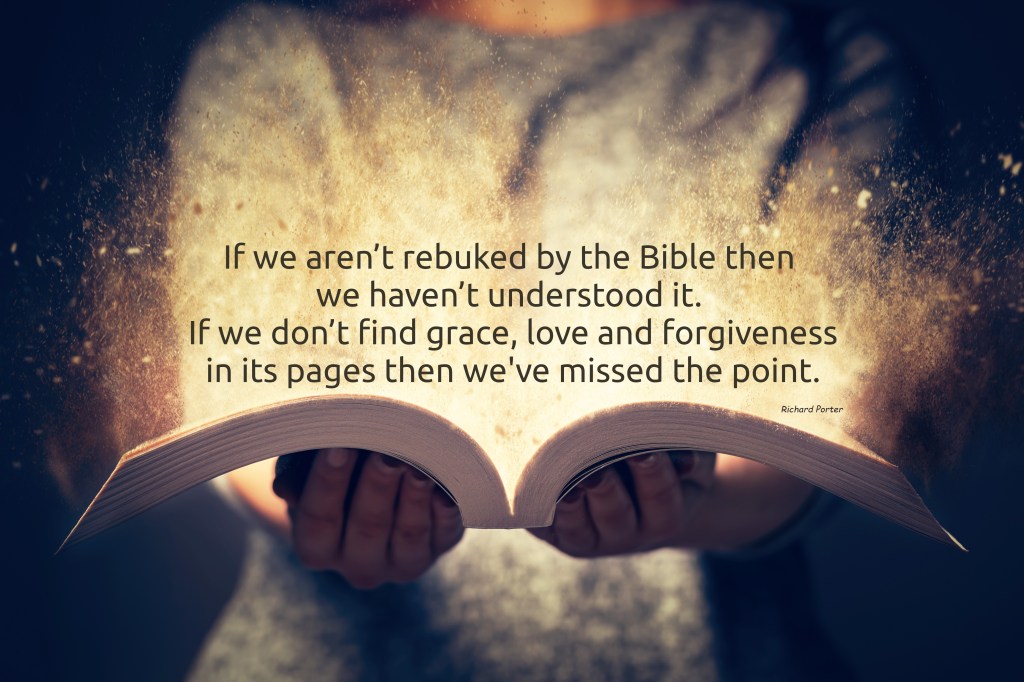
The Bible: A Mirror of Conviction and a Spring of Divine Grace.
I don’t get a warm, gushy feeling when I look in the mirror. Those days are gone. With reluctance, I wave them goodbye and watch them float downstream like little, yellow rubber ducks racing towards an unknown future.
Ah, the exuberance of youth. Perhaps you aren’t as old as me yet, but all I can say is post those selfies while you’re still vibrant and attractive, pat yourself on the back, and smile at the thousands of ‘likes’ posted on your social media pages. The world loves to applaud our participation.
What is really bothersome, though, is when I pick up the Bible and read those parts where God himself evaluates me and doesn’t click the ‘like’ button. When the ultimate authority of the universe isn’t smiling at my selfie, it’s hard to feel good about myself, and the last thing I want to do is advertise my sin.
I have to say, if I stopped reading the pages in this mirror image, I would crumble in a heap and give up. There isn’t much hope in many of those pages.
Fortunately, God shows us two sides of the mirror. One is the selfie we posted, and the other is the one he retouched and publicised himself—but wait, this image isn’t biblical. It’s not accurate enough.
God doesn’t retouch our selfie or run it through some Photoshop programme; instead, he deletes it. He removes it, shreds it, and overwrites it out of existence. That selfie with all its ‘likes’ is now dead, roadkill. (Romans 6:6–7; Ephesians 4:22–24)
Though God has removed our old, sin-stained selfie, he doesn’t cast us aside. Instead, he recreates us in the image of His Son, embracing us as his beloved children. His eternal love affirms our new identity in Christ, and all of heaven rejoices over this divine transformation. As Luke 15:10 tells us, ‘there is joy in the presence of the angels of God over one sinner who repents.’ Or, in other words, all of heaven and God himself click on the ‘like’ button.
There are two sides to the mirror when we pick up God’s book. If we concentrate on one side and ignore the other, the image is blurred. We must hold both in tension. It keeps us humble but not floundering in despair. It gives us hope and power, but without the arrogance that could accompany it.
The Bible is a profound and multifaceted book that serves as both a mirror for our souls and a spring of divine grace. As we read the pages, we encounter two essential truths: the convicting power of God’s law and the overwhelming abundance of his love, and forgiveness.
As Hebrews 4:12 reminds us, ‘For the word of God is alive and active. Sharper than any double-edged sword, it penetrates even to dividing soul and spirit, joints, and marrow; it judges the thoughts and attitudes of the heart.’
When we engage with God’s word, we should expect to feel convicted, uncomfortable, and even rebuked. This discomfort is not a sign of failure, but a sign that we are allowing the Holy Spirit to work within us, revealing areas where we need growth and transformation.
However, the Bible’s purpose is not to rebuke or condemn. If we don’t read far enough to find grace, love and forgiveness in its pages, then we’ve missed the point. The ultimate message of Scripture is one of hope, redemption, and God’s unfailing love for his creation.
A balanced approach to reading and understanding the Bible involves both humility to receive correction and openness to experience God’s boundless grace.
As we journey through its pages, may we allow ourselves to be both challenged and comforted, rebuked and forgiven. It is in this tension that we encounter the living God and are transformed into the image of His Son.
God has worked it out so we can now look in the mirror and hit the ‘like’ button because we see Jesus looking back at us. Christ in you is the hope of glory.
 Richard Porter
Leave a comment